
What happened
On July 15, Anthropic, Blackstone, and Hellman & Friedman introduced Ode — a standalone, roughly $1.5 billion company built to send AI engineers into businesses and wire the technology into how those businesses actually run.
It is not a model and not a product. It is a services firm, built on the applied-AI outfit Fractional AI that the group acquired in May, and it launched with about 100 engineers and a stated focus on midsize companies stuck between an AI pilot and real operations.
The company that makes the model spun up a separate business whose only job is getting that model to work inside yours.
The backers are the tell. Alongside Blackstone and Hellman & Friedman, the investor list runs through Goldman Sachs, Apollo, General Atlantic, Leonard Green, GIC, and Sequoia — the most return-obsessed money in the world, lining up behind AI plumbing rather than another lab.
The detail almost everyone will miss
Read past the valuation and you find an admission. The people building frontier AI are telling you, out loud, that the model is not the expensive problem.
Ode's chief technologist put it plainly: "model selection matters, but it's not where the majority of calories are spent." The calories go into the wiring — the data, the workflows, the approvals, the retraining of how work happens.
If the smartest money in the market is pricing the implementation layer as the trillion-dollar prize, it's because that layer is where value gets stranded today.
There's a second signal hiding in who they're chasing. Amazon and Microsoft aimed their deployment armies at the largest enterprises; Ode is pointed at the midsize — a quiet bet that the biggest pool of un-captured AI value isn't at the top of the market, but in the ordinary companies that bought the tools and never got them working.

The model sits at the center, gleaming and largely finished. The capital is pouring into the scaffolding around it — the structure that holds it up and puts it to work. That's the part they're buying.
Why this matters if you run a business
If your AI has stalled at a promising demo that never changed a number, this launch is your permission slip: that gap is the industry's openly acknowledged bottleneck, not a failure of your team.
The people who build and fund this technology just put $1.5 billion behind a single idea — buying the model is the easy ten percent; wiring it into the operation is the hard ninety, and the ninety is the part that pays.
But notice what's being sold, and to whom. This is a high-touch, enterprise-priced service, staffed by scarce engineers — and even Ode's "midsize" starts well above where most owner-operated businesses live.
The lesson the money is teaching isn't "hire a billion-dollar firm." It's that the deployment is the asset — so whoever owns the deployment owns the value.
That's the fork. You can rent the wiring from a vendor whose incentive is to keep you renting, or you can build it into your own team and keep it. The capability the market just priced at a fortune is one a focused operator can develop deliberately, at their own scale.
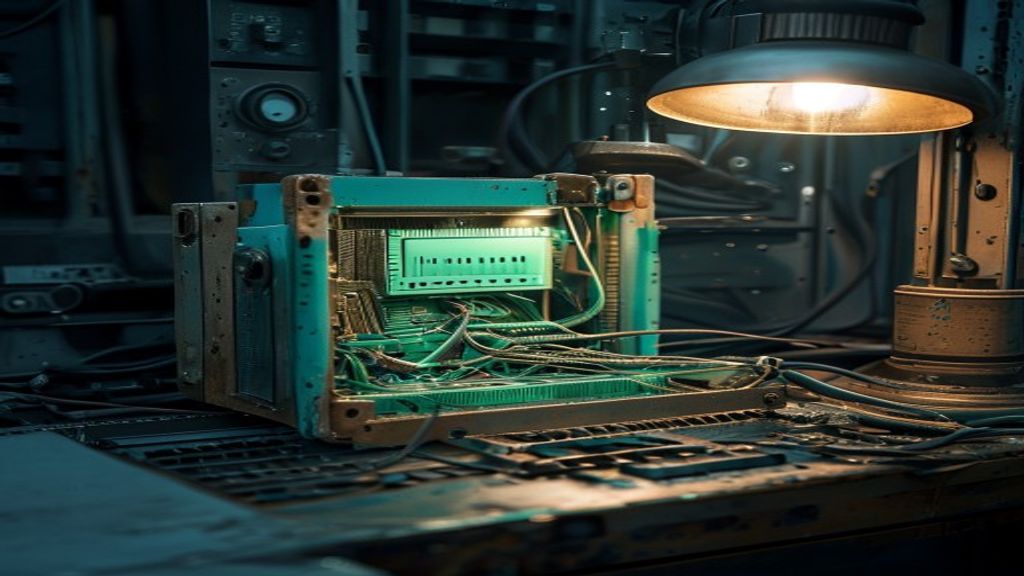
The same job, at your scale: the module fitted into the machine you already run, on your own bench. Nobody is going to sell this to a smaller operator — which is exactly why owning it is the edge.
What to do about it
Take the industry's own conclusion and apply it one size down. Before the next AI decision, get four things straight:
- Budget the wiring, not the license. The seat or the tokens are the cheap part. Put real time and money against the integration — the data, the handoffs, the change in how the work is done — because that's the line item that actually returns.
- Start from an outcome, not a tool. Ode sells "close the books faster" and "fix collections," not "here's a model." Pick one measurable result and wire AI to that, rather than adopting a tool and hunting for a use.
- Own the deployment knowledge. If you bring in help, structure it to leave your team self-sufficient — the same self-sufficiency clause the big deployment firms now write into their own deals. Rented capability walks out when the invoice stops.
- Don't wait to be sold to at your size. The billion-dollar firms are aimed above you. The moves they make — outcome first, embed deeply, measure in the workflow — are not proprietary, and they work at any scale.
Wall Street just spent $1.5 billion agreeing that the model was never the point. For a smaller operator, that's not a threat — it's the clearest signal yet that the advantage is in the doing, and the doing is something you can own.