What happened
On July 13, the union at Hyundai Motor in South Korea began a three-day partial strike, walking off for hours across day and night shifts. The demands included the usual — a richer bonus, profit-sharing, a retirement age lifted from 60 to 65.
One demand was new. Alongside pay, the union wanted formal negotiations before the company introduces humanoid robots, plus income protections as automation expands.
It is being reported as the first car-factory work stoppage to put humanoid robots themselves on the bargaining table.
The robots are not there yet. Hyundai owns Boston Dynamics, and it plans to move that company's Atlas humanoid into its US plants starting in 2028 — logistics work first, assembly by the end of the decade — with reporting on the rollout pointing to a target north of 25,000 units across Hyundai and Kia worldwide.
The detail almost everyone will miss
The workers did not strike to stop the robots. They struck to be at the table before the robots — to shape how automation lands, not to forbid it.
They are not fighting the technology. They are fighting being deployed around instead of deployed with.
Strip away the picket line and that is the single most common way AI stalls inside an ordinary business. The tool arrives, the people whose work it changes are handed it and told to be grateful, and the resistance goes quiet and invisible — it just looks like the pilot "didn't work."
By one 2026 enterprise survey, 29% of employees — and 44% of Gen Z — admit to actively undermining their own company's AI push, and most agent pilots never make it from demo to production at all.
Hyundai's people simply did in the open what a lot of workforces are doing behind a badge reader.
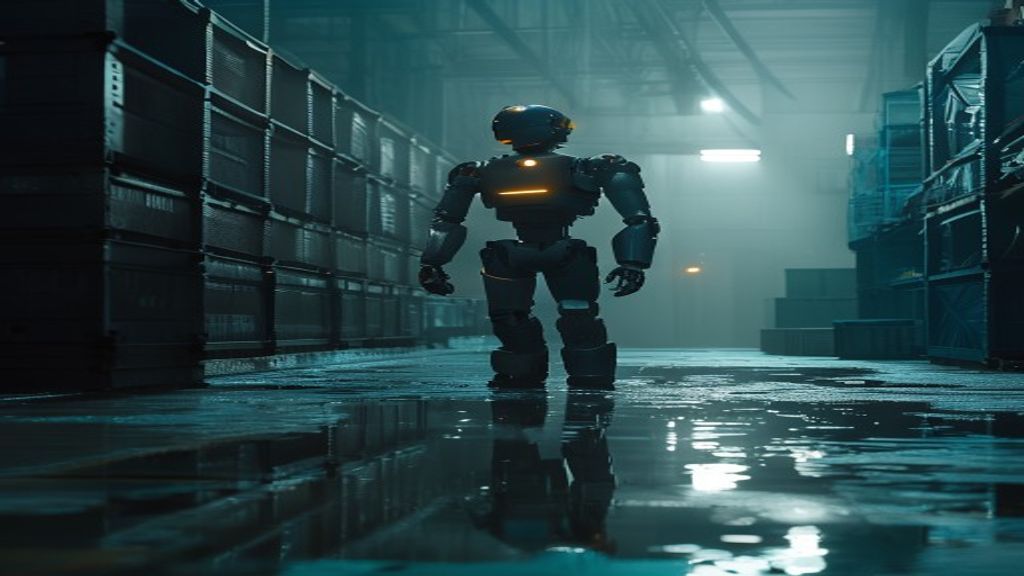
The thing itself, still in the staging bay — powered down, waiting, years from the line. The strike happened anyway, because the fight was never really about this machine. It was about who gets a say before it moves.
Why this matters if you run a business
You will probably never face a union vote over a chatbot. You face the same physics anyway: the model is the easy part, and the people whose work changes are the hard part.
Most stalled AI is not a bad model. It is a workforce that was handed a tool without a reason to want it.
The resistance is rational, which is what makes it durable. People protect their standing; if your rollout treats them as the obstacle, they will behave like one — slowly, deniably, and in a way no dashboard flags.
Hyundai's own production chief warned the walkout would bring "irreversible production losses." That is the price of getting the sequence wrong, and it lands on output — the same output the automation was supposed to lift.
Deployment is a change-management problem wearing a technology costume, and the company that wins is the one that budgets for the change, not just the license.
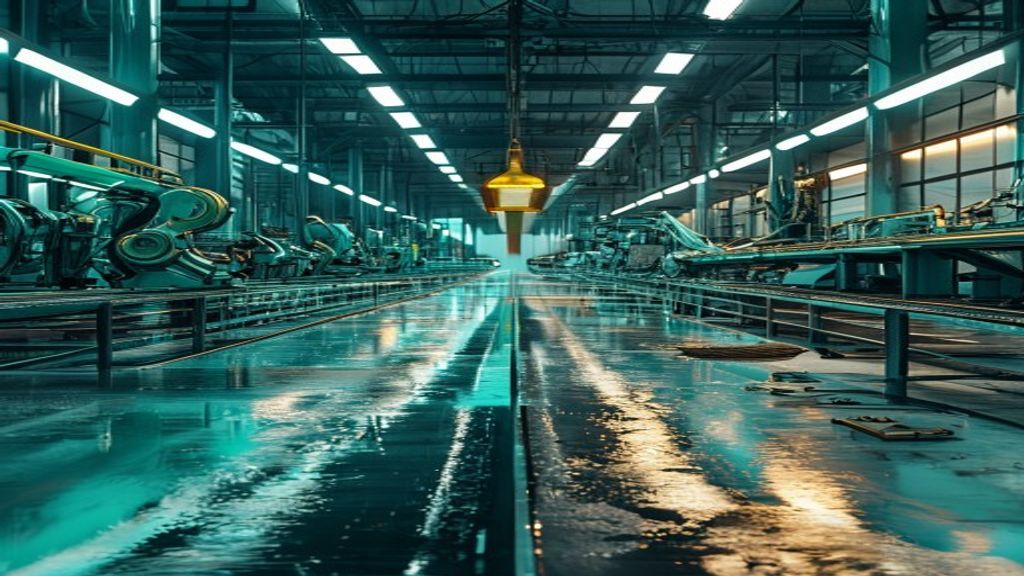
The plant the automation is meant to run. Whether it ever does isn't decided by the machines lining the aisle — it's decided by whether the people who work between them were brought in before the switch was flipped.
What to do about it
Take Hyundai's lesson one size down and use it before your next AI decision:
- Negotiate before you deploy, not after. Bring the people whose jobs change into the design while it's still a draft. A seat at the table is far cheaper to give than a stalled rollout is to restart — Hyundai's union wanted exactly that, and it's the concession that costs least.
- Sell redeployment, not removal. Tie every automation to what the freed-up hours become — in writing. "This handles the intake so you run the accounts" beats an unspoken threat every time.
- Make the gain land on the person. If AI makes someone dramatically faster, that has to show up in their standing, not only in the P&L. People push a tool forward when it makes them more valuable.
- Measure adoption, not deployment. A tool nobody actually uses is a failed rollout, however good the model. Track the second number, because it's the one that pays.
The robots Hyundai's workers struck over won't arrive until 2028. The reason they struck is already inside your company — and it's the thing that decides whether your AI ever leaves the pilot.